
In early 2024, multiple dairy farms in several states in and around the Texas Panhandle reported an abrupt spike in sick lactating cows.
Affected cattle showed a severe decrease in milk production/feed intake and abnormal rumen function; some had a high fever of short duration, some had changes in their feces, and thick yellow milk similar to colostrum was noticed in many of these cows.
Initial testing was performed on milk, feces, blood, and feed samples for many common and uncommon diseases that would fit with even some of the observed clinical signs; this testing consistently and confidently ruled out many potential diseases.
Multiple veterinarians on affected farms also reported either neurologic disease in cats (changes in behavior, blindness, difficulty walking) or a sudden decrease in their onsite cat population.
These cats commonly had access to and consumed milk from the hospital pen at these farms, so there was the possibility of these two conditions being related to each other.
Several affected cats and milk samples from affected cows were collected and sent to our lab, hoping that finding an answer to the disease in cats may provide clues to what was going on in cows.
An increase in dead birds was also noted at some farms.
Influenza infection in cats is welldocumented and fit well with the described clinical signs.
We tested multiple samples from the cats as well as the milk samples for Influenza; all samples were positive and all contained very high amounts of the virus.
Testing ruled out other potential causes (such as rabies or neurotoxin exposure). Our laboratory double checked our Influenza test results and retested the samples the next morning to ensure this was not due to lab error or contamination.
Additional testing found the virus was an H5N1 Influenza A virus; this strain of Influenza has been circulating worldwide since 2022.

Samples were sent to the National Veterinary Services Laboratory for confirmation; over the next several days, samples from dairy farms in other states showed identical results that gave us additional confidence in our initial findings.
We communicated what we had found with other labs involved in the investigation; they tested saved samples and found the same results.
There has been some variation in the disease on affected farms. Older cows and mid-lactation cows seem to be affected more often than heifers and newly fresh cows.
Environmental differences also seem to play a big role in disease severity: much higher death loss occurred in California in September/ October (high temps: 90s and low triple digits for several weeks) compared to Texas in February/ March.
On-farm treatment has focused on reducing fever and keeping cows hydrated. Arguably the biggest challenge according to herd veterinarians has been the sheer number of cows requiring individual treatment.
Since the initial diagnosis, genetic analysis of the virus found in dairy cows and comparison to other strains has determined that this virus moved into cattle from wild birds likely in late 2023.
The vast majority of transmission within the dairy industry has been from cowto-cow and farm-to-farm.
Spread of the virus to other states occurred when infected but outwardly healthy lactating cows were sold and transported to their new farm before the original site saw any evidence of disease.
It is not entirely known how local spread between nearby dairy farms occurs; many connections exist between these sites that involve workers, equipment, and service personnel.
Birds have not served as the source of new cattle infections in nearly all cases; however, in early 2025, a different H5N1 strain was detected in two states that was transmitted from migratory birds into dairy cattle.

There are essentially two ways to learn about this virus and how it affects cattle: by analyzing data/testing samples from affected dairy farms, and by putting the virus back into cattle in a controlled research setting.
Our lab and many other labs/research teams have worked with veterinarians/dairy workers/ owners on affected sites, and much has been learned about what samples we can use to find the virus, production impacts, and how long we can expect to find both the virus and antibodies to the virus in cattle.
Among the difficulties in conducting research studies is the relative lack of appropriate facilities; only a small number of places worldwide have the ability to put a potential human pathogen into mature cows, and many of them had no need to milk infected animals prior to this situation.
Despite these difficulties (and many more), multiple research groups have successfully recreated clinical disease in lactating dairy cows; having a reliable model to recreate disease is an incredibly important step in learning how this disease works and studying potential ways to prevent it.
An immense amount of research is ongoing; here is a brief list of some of the more impactful findings to date:
• Nearly all virus is found in the milk and mammary gland.
• We have excellent diagnostic tests to identify current/recent infection.
• Bulk tank milk samples can be used to monitor dairy farms.
• Infected cows develop at least shortterm protection from reinfection.
• Non-lactating cattle (dry cows, heifers, calves) can be infected but do not seem to infect others.
• Pasteurization works.
As soon as we had confidently answered the initial question of “What is this?”, loads of new questions immediately came up regarding this virus in cattle.
Even more questions arose regarding the potential impact on other animal industries as well as trade and human health.
Some of these questions have been answered but many remain; here is my short list of the most important questions that we as an animal health/veterinary community still need to answer:
• How is this virus moving between farms?
• Once it makes it to a new farm, how does it get into the mammary gland?
• How is this virus spreading between cows on affected farms?
• How long are cows protected from reinfection?
• How did the known spillover events from birds to cows actually occur?
Since the initial diagnosis, the dairy industry has dealt with many new and important questions. But what about beef cattle?
There have not yet been any detections in beef cattle, but assuming similar disease would occur that we see in dairy cows: how would we know if a beef cow/herd is infected?
Noticing a significant drop in feed consumption or hungry calves due to a drop in lactation is very likely dependent on the season.
Could there be any impact on feedlot performance in non-lactating cattle?
The dairy industry has several factors going for it that improve the chances of finding acutely sick cattle.
The amount of data collected and analyzed on large modern dairy farms is immense; aside from daily individualized milk production data, many farms use milk conductivity from each mammary quarter to flag potential cases of mastitis.
While the use of robotic milking equipment is increasing, most dairies still have workers that see every cow multiple times daily.
Rumination and activity monitors identify cows that may be sick early in the process and alert staff that something is wrong.
How many of our beef herds would have anything close to these systems for early indications of disease or anywhere near the frequency/consistency of individual cow contact?
In this particular situation, the single best sample to test for this virus (milk) is collected from every lactating cow on every dairy in the country 2-3 times per day.
There is no comparable daily whole-herd sample for beef cattle.
At the same time, how we manage dairy cattle and harvest milk may be significant factors in the spread of this virus that the beef industry just does not have to worry about.
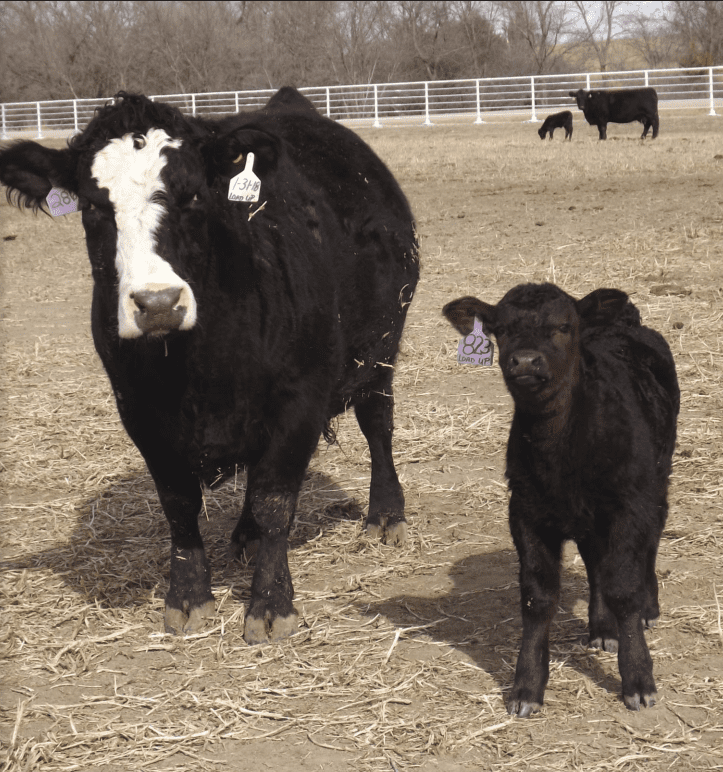
Other than her calf, essentially no other animal is regularly exposed to significant amounts of milk from a beef cow.
We do not run beef cows through a milking parlor environment (humid, potential for aerosolization of milk) or hook up a milking unit that was just used by another animal, so spread within a beef herd may be limited even if a single cow becomes infected.
Most (not all) beef cow operations have significantly more space per cow; however, that space is largely outdoors: does that increase potential exposure from wild birds? Answering those five “How…?” questions from earlier will go a long way in determining risk in beef herds.
Since the outbreak began, the USDA has issued two federal orders related to testing for Influenza in dairy cows.
The first order (April 2024) requires testing of lactating cows prior to interstate movement and requires herds that test positive to participate in disease investigation surveys.
The second order (December 2024) allows USDA personnel to obtain samples of milk intended for pasteurization.
This order is supported by the National Milk Testing Strategy which provides participating states with surveillance testing for early detection and will eventually establish confidence in elimination of the virus on a state/regional/national level.
The bottom line: “I don’t know” still applies to many questions that get asked.
And that is ok, as long as it is followed by a plan to get an answer. We can certainly learn from this situation and improve… right now.
Sow farms look much different today than they did prePEDV; the poultry industry changed their approach to HPAI following the outbreak in 2014-15.
Those industries learned some tough lessons and adapted; the dairy industry will likely do the same to some degree.
Challenges that we do not anticipate will no doubt continue; how we respond to those challenges is entirely up to us.
 Drew Magstadt is a Clinical Associate Professor and has been a veterinary diagnostician for the past decade at the Iowa State Veterinary Diagnostic Laboratory. He grew up on a ranch in central North Dakota and spent two years in mixed animal practice. His research interests generally stem from real-world case submissions and include applied research into infectious diseases of food animal species.
Get all Doc Talk episodes straight to your email inbox!