
Drinking water quality is critical for the health and productivity of beef cattle.
Poor-quality drinking water may cause reduced feed intake, poor weight gain, reproductive issues, and even toxicity.
The following table has guidelines for animal drinking water.
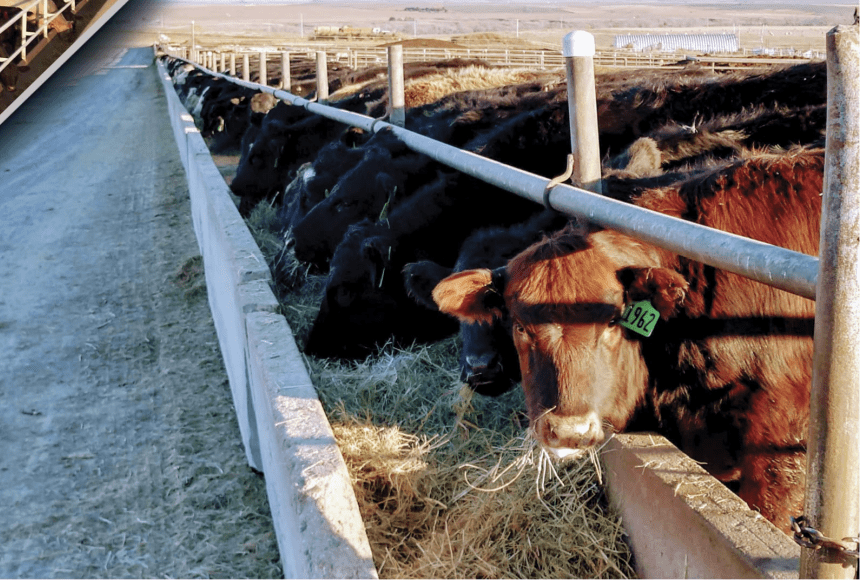
The main concern with drinking water for cow-calf operations is adequate drinking water availability.
The highest death loss in cow-calf herds associated with drinking water is water deprivation/sodium toxicosis.
These issues are more common during the summer months with elevated environmental temperatures but frozen drinking water devices in the winter also cause health issues and death loss.
Hauling drinking water for cattle in tanks previously used for farm chemicals including nitrate/nitrite is also associated with high death loss.
One of the biggest issues with the drinking water quality of animals is the water report issued by the water testing laboratory.
Water testing is done by many commercial laboratories with the results reported as human drinking water parameters.
When the water laboratories issue their report, the report uses human drinking water standards to report results.
Many results get flagged yellow or red because they are out of normal range.
None of the ranges for this water testing are meaningful because human drinking water standards do not equate to animal drinking water standards.
As a result, there is much concern with the results that are reported when in reality, there is no concern.
Many reputable testing laboratories use reference ranges that have no peer reviewed data.
Much of the reference ranges came from extension papers or other references that are not peer reviewed.

Reference ranges for coliforms are a good example of references with no peer reviewed data.
Coliforms are a significant concern in human drinking water. Coliforms are measured per 100 ml of water.
If even one coliform per 100 ml is detected in the drinking water, a boil order is initiated, and shock chlorination is performed on the affected water.
Bacterial, viral, and parasitic contamination of drinking water occurs in human drinking water.
Bacterial, viral, and parasitic contamination of drinking water of animals could occur but is low on the level of concern for drinking water.
If you do not find coliforms in surface water, something is wrong with your testing method.
We want to provide the very best drinking water we can for our animals, but their level of concern from the appearance of the water, the smell of the water, and the turbidity of the water is low.
If anyone has watched animals drinking from a pond, dugout, or creek, they have seen cattle urinating and defecating in the same water that other cattle are drinking.
After a rain, cattle in a dirt lot will drink water from the puddles in the lot and they have no negative effects.

Future work with drinking water quality for animals should include working with one analyte at a time to find at what point animal health and performance is negatively impacted.
Once we know that, then we can include increasing several analytes at a time to see when animal health and performance is negatively impacted.
There is some work going on now with costeffective methods of treating wastewater to make it suitable for animal drinking water.
These treatments have to be cost effective and able to meet the high demands for drinking water.
A 100,000-head feedlot would consume approximately 1,389 gallons per minute (GPM) on average, assuming 20 gallons per head per day.
When collecting a water sample, the water collection bottle needs to be as clean as possible but not disinfected if you do not want to measure the coliform count.
If you are going to measure coliform in water, the sample needs to becollected as aseptically as possible.
It is easiest to get a drinking water container from the local convenience store.
To collect an animal drinking water sample from a well, you need to collect one as close to the well as possible, then a second sample at the most distant part of the water distribution system.
To collect a sample from surface water, collect the water sample at least a few feet away from the bank and fill the bottle, dump it out, and then refill it.
After collecting the water sample, keep it cool and get the sample to the laboratory as quickly as possible.
 Dr. Steve Ensley graduated in 1981 from Kansas State University with a DVM. His father was a mixed animal practitioner in northeast Kansas. After 14 years in mixed practice in the Midwest with his father, he received a MS and PhD in veterinary toxicology at Iowa State University completing his PhD in 2000. Dr. Ensley has worked for the University of Nebraska-Lincoln (ran the North Platte diagnostic laboratory), Bayer AG in Kansas City, Iowa State University for 15 years, and presently Kansas State University Veterinary Diagnostic Laboratory. Dr. Ensley’s interests are clinical veterinary toxicology and applied veterinary toxicology research. Dr. Ensley has published extensively on applied veterinary toxicology and has given numerous presentations on these topics. Food animal veterinary toxicology is his passion.
Get all Doc Talk episodes straight to your email inbox!