
Infectious diseases threaten beef cattle health and welfare and can decrease productivity and profitability.
Vaccination is an important component of control and prevention of these diseases.
A vaccination program, however, is not a substitute for good nutrition, adequate ventilation, effective sanitation, and other health management procedures.
Vaccination programs should be developed in cooperation with the herd veterinarian.
Individual herd circumstances, including disease history, biosecurity, management, housing, and other factors, affect the specific vaccination programs in any beef operation.
Type of vaccine, such as killed or modified live, stage of production, costs and benefits, and other factors must be considered.
Vaccines help prevent infectious diseases, but no vaccine provides 100 percent immunity for all animals in a herd.
Vaccines raise the general level of herd immunity so that the spread of an infectious disease or severity of clinical illness is minimal.

Some vaccines are produced by modifying the infectious agent in such a way that the organisms remain alive, multiply, and produce immunity in the vaccinated animal but do not produce disease.
Many modified live viral (MLV) vaccines should not be given to naive pregnant cattle because they cause abortion.
Modified live vaccines generally produce a higher level of immunity than killed vaccines but may have a degree of risk when given to either pregnant or highly stressed cattle.
Vaccines are often ineffective at eliciting new antibody production when given to young calves.
Very young animals have a functional immune system that can respond to vaccines or antigens, but it is immature compared to older animals and may not be able to respond to the vaccine or antigen as effectively as older animals.
Antibodies acquired from the dam through colostrum that protect the calf from many infectious diseases may interfere with calves’ immune response and is a potential reason for not vaccinating very young calves against some infectious diseases.
However, there are vaccines that can produce an effective immune response, even in newborn animals.
Consult with your veterinarian regarding the use of vaccines in animals less than four months of age.
An oral vaccine containing bovine rotavirus and bovine coronavirus can be given orally to newborn calves.
The oral MLV vaccine should be given prior to ingestion of colostrum or it will be inactivated.
Many veterinarians prefer to use injectable rotavirus/coronavirus/E. coli in the dam prior to calving and depend on colostral antibodies to protect calves.
Vaccination of calves for infectious bovine rhino-tracheitis (IBR), bovine virus diarrhea (BVD), parainfluenza-3 (PI-3), and bovine respiratory syncytial virus (BRSV) is usually delayed until pasture turnout or pre-weaning.
Veterinarians often advise use of this vaccine in herds with a history of summer pneumonia in young calves.
Use of this vaccine at spring turnout also serves as a priming dose for the preweaning vaccination, thus providing improved immunity at weaning.
Vaccination of neonatal calves with an intranasal IBR/PI-3/BRSV vaccine may be more beneficial than standard injectable vaccines in young calves.

Calves are usually vaccinated for the major clostridial diseases prior to pasture turnout with a 7-way clostridial vaccine.
Some clostridial vaccines can be given to newborn calves, but immunity will be improved if vaccination is delayed until branding or grass turnout.
In some herds, pinkeye is a continuous problem of calves during summer grazing season.
Vaccination of cows or neonatal calves is not rewarding as colostral immunity is depleted or neonatal calves do not respond well.
To be most efficacious, pinkeye vaccines should be given when calves are three to four months of age prior to maximum risk of disease in midsummer and include a booster dose for effective immunity.

Producers who intend to retain ownership of their calves or desire to market preconditioned calves should vaccinate at least 14 days prior to weaning.
The stressful weaning period is avoided so that calves have a better immune response and immunity is developed prior to weaning, when risk is highest.
There are many MLV vaccines approved for calves nursing pregnant cows as long as the cow has been previously vaccinated.
• IBR (infectious bovine rhino-tracheitis)• BVD (bovine virus diarrhea)• PI-3 (parainfluenza-3)
• BRSV (bovine respiratory syncytial virus)
• Mannheimia haemolytica
• Histophilus somni
• 7-way clostridial vaccine
Ideally calves should receive a second vaccination against IBR, BVD, PI-3, and BRSV after weaning.
Calves that did not receive preweaning vaccinations should be vaccinated at weaning, although the immune response may be decreased due to the stress associated with weaning.
Vaccination for viral reproductive diseases (IBR and BVD) using a MLV vaccine 45 days prior to breeding is best time to provide protection for the cow herd.
Replacement heifers should receive three vaccinations (preweaning, weaning, and pre-breeding) with a MLV IBR and BVD virus before their first breeding season.
Pre-breeding vaccination for vibrio and leptospirosis (5 strain) is optional for well managed beef herds.
Producers who only handle the breeding herd once per year should perform lepto vaccinations in the fall when cows are pregnancy tested.
The pre-breeding vaccinations should be done approximately five to six weeks prior to breeding to avoid any possible vaccine induced stress or complications that could affect fertility.
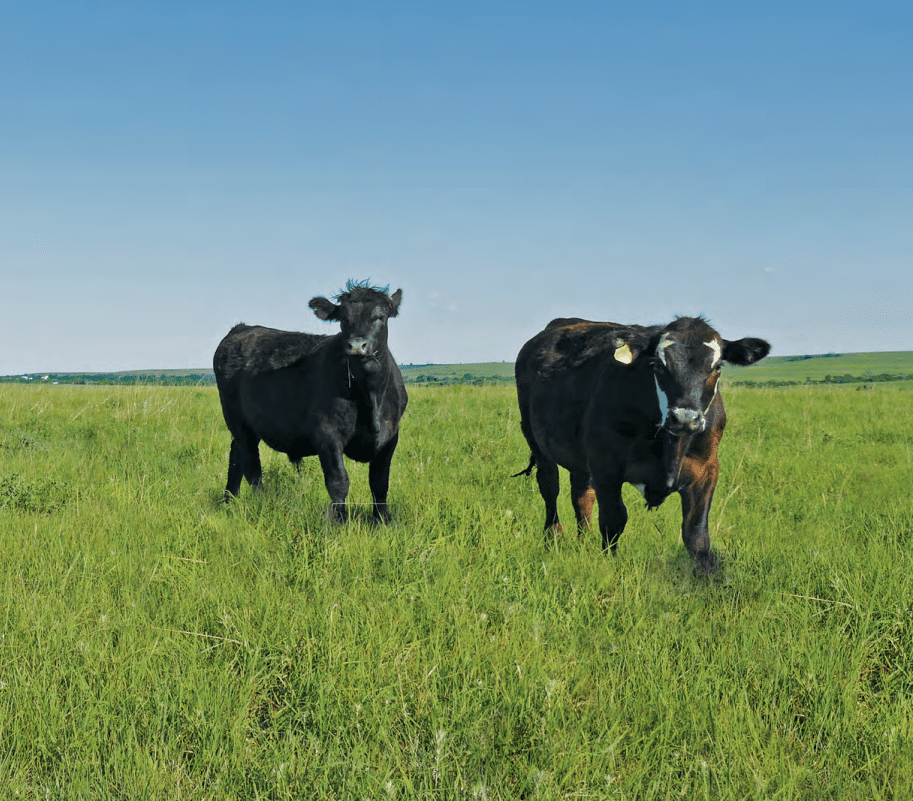
Booster vaccinate cows and heifers if not vaccinated pre-breeding for:
• IBrR, PI-3, BVD, BRSV. Generally killed vaccines are used in pregnant cows.
Some MLV vaccines are approved for pregnant cows if the cows have been vaccinated previously with that vaccine.
Consult with your veterinarian before giving MLV vaccines to pregnant cows.
• Leptospirosis vaccines should be boostered in herds that have a history of abortions due to leptospirosis, have high risk of lepto exposure, or are a confined beef cow operation.
Rotavirus, coronavirus, and E. coli—scours vaccines have traditionally been given to replacement heifers twice, approximately six and three weeks prior to calving.
Previously vaccinated cows are vaccinated once, three weeks prior to calving, or twice according to the same schedule as first-calf heifers in herds not previously vaccinated or in problem herds.
Recent work has shown that improved immunity is provided if the booster vaccination is given approximately five weeks prior to calving when colostrum formation begins.
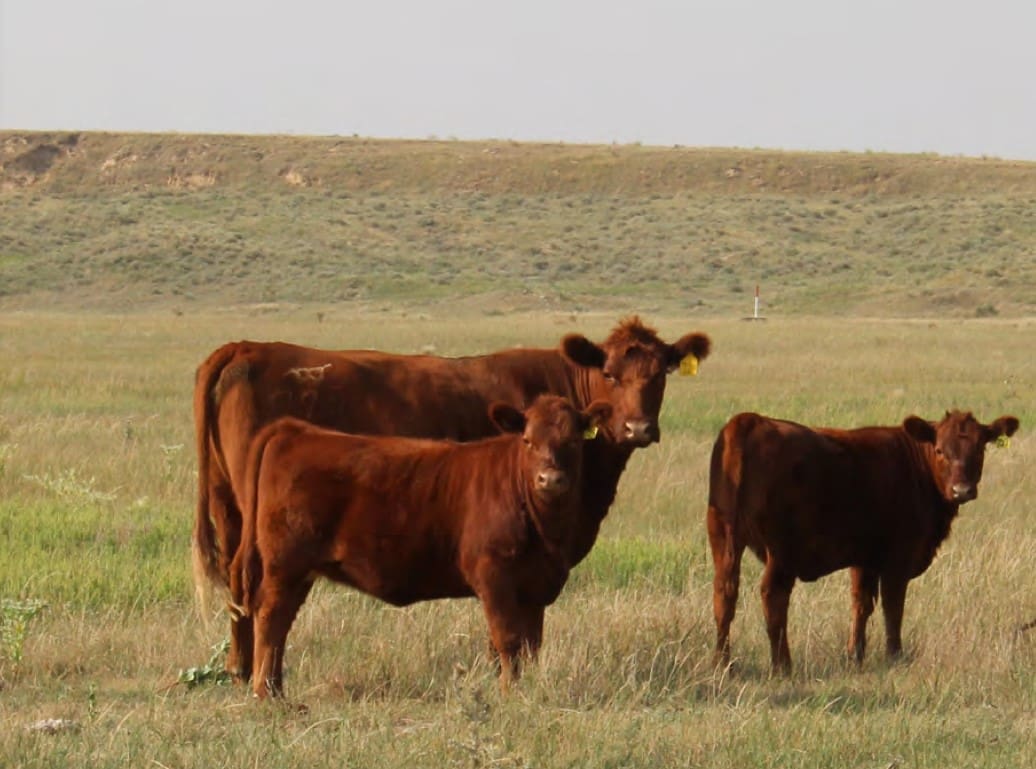
Give IBR, BVD, PI-3, BRSV, and leptospirosis vaccines annually.
Herds with a risk of Campylobacter fetus (vibrio) or Tritrichomonas foetus (trich) may benefit from an annual vaccination against one or both of these sexually transmitted diseases.
To prevent any fertility problems, it is best to vaccinate bulls 60 days prior to breeding season unless label indicates shorter interval.
Improving the immune function of feeder cattle requires an approach that begins in the cow-calf operation.
This approach is based on providing the proper balance of maternal nutrition and vaccination protocol in order to provide lifetime health and performance for the calf.
 Dr. Grant Dewell received his DVM from Colorado State University in1993 and was in a primarily beef cattle practice in central South Dakota. Besides obtaining a Master’s degree in Agriculture Economics and a Ph.D in Epidemiology from CSU, he was a clinical instructor at University of Nebraska’s Great Plains Veterinary Education Center in Clay Center, Nebraska. Since 2008 he has been the Beef Cattle Extension Veterinarian at Iowa State University. Dr. Dewell’s research interests are health management of cattle, animal welfare and economic considerations for beef production operations.
Get all Doc Talk episodes straight to your email inbox!